
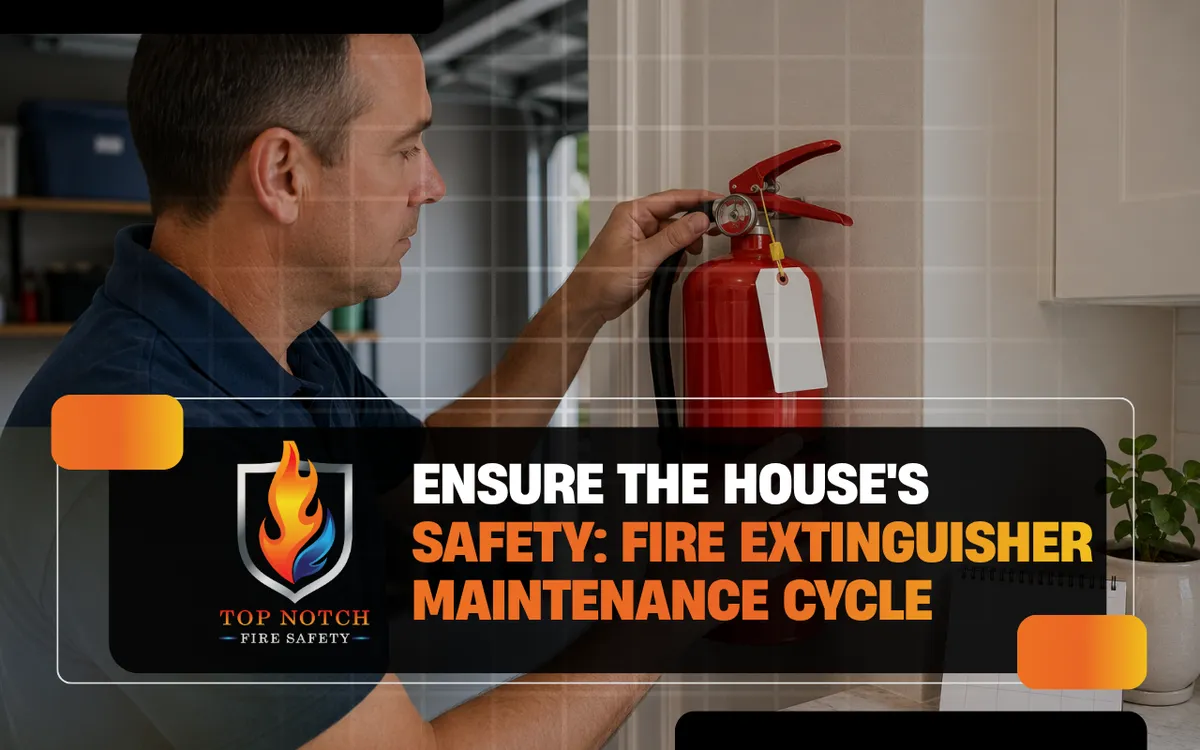
Ensure the House's Safety: Fire Extinguisher Maintenance Cycle
Home fire safety depends on more than owning an extinguisher. A clear fire extinguisher maintenance cycle helps keep the unit visible, accessible, and ready to work when every second matters.
At Top Notch Fire Safety INC, we support practical fire protection through dependable service and clear guidance. You can explore our fire safety services to understand how routine care supports a safer home.
Routine Extinguisher Care Protects Your Household
A fire extinguisher can sit unused for months or years. During that time, seals may weaken, hoses may become blocked, and pressure may change. Following a regular fire extinguisher maintenance cycle can reveal these problems before the unit is needed.
Simple checks also give your household more confidence. You can confirm that the extinguisher is easy to reach, properly mounted, and free from visible damage. These steps do not replace professional service, but they help you notice warning signs early.
Know Your Extinguisher Type and Service Needs
Different extinguishers contain different agents and are designed for specific fire risks. Always follow the instructions printed on the label and avoid opening or repairing the cylinder yourself.
Dry chemical extinguishers may need internal servicing based on their type and service history.
Carbon dioxide units require careful weight and cylinder checks because many do not use a standard pressure gauge.
Water and foam extinguishers should be checked for corrosion, leaks, and damage around the valve.
Wet chemical units need proper care because they are commonly used for cooking-related fire risks.
A qualified technician can identify the correct service interval for each unit. Portable extinguisher maintenance should always match the manufacturer’s instructions and the extinguisher’s condition.
Inspection Tags Create a Clear Service Record
Fire extinguisher inspection tags show when a unit was checked or serviced. Review the latest date, technician information, and service notes. A missing, damaged, or outdated tag may indicate that the extinguisher needs professional attention.
Our team at Top Notch Fire Safety INC can review the extinguisher, its service history, and its physical condition. Keeping clear records also makes the fire extinguisher maintenance cycle easier to follow throughout the year.
Do not rely on the tag alone. The extinguisher may have been moved, discharged, damaged, or exposed to poor storage conditions after its last recorded inspection.
When Does an Extinguisher Need Professional Service?
Professional service is important after any use, even if only a small amount of agent was discharged. A technician should also inspect units with low pressure, broken seals, damaged hoses, corrosion, missing parts, or unreadable labels.
The fire extinguisher recharge process usually includes emptying or refilling the correct agent, checking internal parts, restoring the proper pressure, and confirming that the extinguisher is ready for service. This work requires suitable equipment and trained handling.
With Top Notch Fire Safety INC, you can request guidance when a gauge appears outside its normal range or when an extinguisher has been used. A timely service visit helps prevent an unreliable unit from remaining in place.
Monthly Checks for Damage, Access, and Pressure
A brief monthly review can help you spot changes between professional service visits. Choose a regular day each month so the check becomes part of your home safety routine.
Confirm that the extinguisher remains in its assigned location.
Make sure furniture, boxes, or appliances do not block access.
Check the cylinder, handle, hose, and nozzle for visible damage.
Verify that the pin and tamper seal remain secure.
Read the pressure gauge when the extinguisher includes one.
Review the label and inspection tag for damage or missing information.
If you notice rust, dents, leaks, loose parts, or an unusual gauge reading, do not test the extinguisher by discharging it. Remove it from normal use and arrange a professional inspection.
Safe Storage and Family Readiness at Home
Proper storage protects the extinguisher and makes it easier to reach. Keep each unit near an exit and close enough to the risk area without placing it directly beside a likely fire source.
Mount the extinguisher securely and keep the instructions facing outward.
Avoid areas with heavy moisture, direct heat, or damaging temperature changes.
Teach household members where each extinguisher is located.
Review the PASS method: Pull, Aim, Squeeze, and Sweep.
Leave the area and call emergency services when a fire is spreading or unsafe to approach.
Family training should focus on safe decisions, not only extinguisher use. An extinguisher is intended for a small, manageable fire when there is a clear exit behind the user.
Frequently Asked Questions
How often should I look at my fire extinguisher?
A simple visual check each month can help you notice damage, blocked access, or pressure changes. For local assistance, review our fire extinguisher service in Clearwater.
What do fire extinguisher inspection tags show?
They usually record inspection or service dates and may include technician details. When you choose Top Notch Fire Safety INC, we can help determine whether the recorded service history matches the unit’s current condition.
What is included in a hydrostatic testing overview?
Hydrostatic testing checks whether a cylinder can safely hold pressure. The process requires trained handling and suitable equipment. Property owners near St. Petersburg can explore our St. Petersburg extinguisher service for local support.
Should an extinguisher be recharged after partial use?
Yes. Even a short discharge can reduce pressure or release part of the agent. A technician should inspect and recharge the unit before it returns to service.
Can I perform portable extinguisher maintenance myself?
You can complete basic visual checks and keep the unit clean and accessible. Internal service, recharging, repairs, and pressure testing should be handled by trained professionals. Homeowners in nearby areas can also view our Tampa fire extinguisher service.
Keep Your Clearwater Extinguisher Ready for Use
Consistent fire extinguisher care in Clearwater starts with monthly checks, safe storage, clear records, and professional service when needed. At Top Notch Fire Safety INC, we can help you address visible damage, pressure concerns, expired service records, and recharge needs.
Use the fire extinguisher maintenance cycle as a practical home safety habit rather than a one-time task. To discuss the condition of your equipment, visit our fire extinguisher service contact page.