
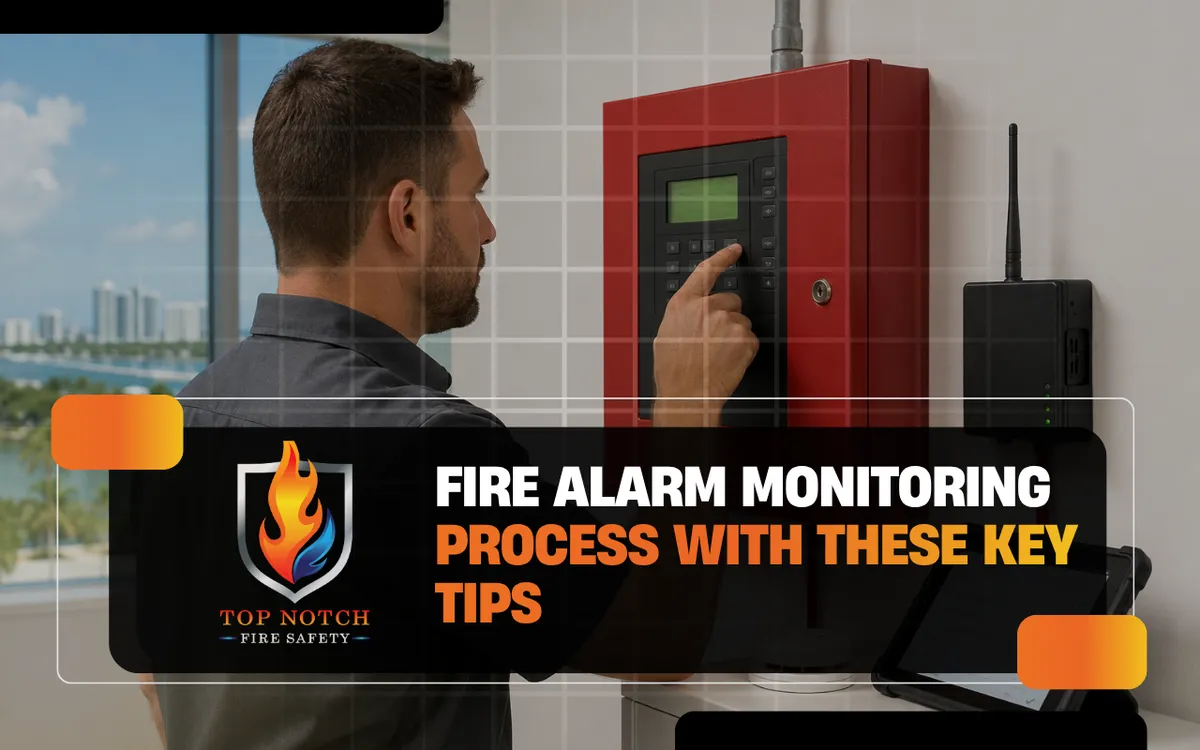
Fire Alarm Monitoring Process with These Key Tips
A reliable fire safety plan depends on fast signals, clear communication, and trained people. An organized fire alarm monitoring process helps protect occupants and property by moving each alarm from the building system to the correct response team without avoidable delay.
At Top Notch Fire Safety INC, we focus on making complex safety systems easier to understand. Commercial properties in St. Petersburg need dependable monitoring, practical procedures, and regular system care to support a calm and effective response when an alarm occurs.
Why Does an Efficient Monitoring Process Matter?
An efficient system helps separate real emergencies from equipment faults or accidental activations. Clear signals allow monitoring personnel to review incoming information and follow the correct response steps. This reduces confusion and helps building staff understand what is happening during a stressful event.
Our team at Top Notch Fire Safety INC understands that commercial fire alarm monitoring must support both speed and accuracy. A well-planned fire alarm monitoring process also gives employees, tenants, and visitors greater confidence because they know alerts are connected to an organized safety response.
Core Components That Keep Signals Moving
Every part of the system has a role in detecting danger, sending information, and warning occupants. Property managers should understand how these parts connect so they can recognize problems before those problems affect system performance.
Smoke, heat, and other detection devices identify possible fire conditions.
The control panel receives signals and determines the type and location of an event.
Communication equipment sends alarm information to the monitoring station.
Notification devices warn occupants through horns, strobes, or voice messages.
Backup power supports the system when normal electrical service is interrupted.
A clear device map and updated system records make troubleshooting easier. Businesses planning upgrades can review our fire alarm installation services in St. Petersburg to understand how properly connected components support dependable monitoring.
Central Station Communication From Alarm to Action
Central station communication begins when the control panel sends an alarm, supervisory, or trouble signal. The monitoring team receives the signal, checks the account information, and follows the response instructions connected to that property. Accurate records help the team reach the correct contacts without wasting time.
With Top Notch Fire Safety INC, you can build procedures around your property layout, contact list, and daily operations. A clear escalation path should explain who receives the first call, which backup contacts are available, and how unresolved signals should be handled.
Businesses with locations outside St. Petersburg can also review fire alarm installation in Tampa or fire alarm installation in Clearwater when planning consistent safety systems across several sites.
Choosing Reliable Monitored Fire Alarm Technology
The right monitored fire alarm technology should send clear signals and give authorized users useful system information. A simple interface can help staff review system status, identify trouble conditions, and report concerns without needing advanced technical knowledge.
Confirm that the equipment works with the building’s control panel and communication method.
Look for clear reporting that separates alarm, supervisory, and trouble signals.
Check whether remote status tools support faster troubleshooting.
Review backup communication options for power or network interruptions.
Choose equipment that can be maintained without disrupting normal operations.
Technology should support the safety plan rather than make it harder to manage. Property owners should compare system features with building size, occupancy needs, staff responsibilities, and the type of response expected from the monitoring station.
Building Clear Emergency Notification Procedures
Emergency notification systems help occupants understand when to evacuate, where to move, and what actions to avoid. Audio alarms, visual signals, and voice messages should work together so people receive clear instructions in different areas of the property.
Written procedures should identify who communicates with employees, visitors, security personnel, and emergency responders. Messages should be direct and easy to understand. Staff should also know how to guide people who may need extra help during an evacuation.
When you choose Top Notch Fire Safety INC, we can help you consider how alarm signals and notification devices fit into a wider response plan. Good coordination reduces mixed messages and supports faster decisions during an emergency.
Maintenance, Training, and Response Testing
Routine maintenance keeps the fire alarm monitoring process dependable. Inspections and testing can reveal dirty detectors, weak batteries, damaged devices, communication faults, or outdated contact information before these issues interfere with an actual alarm.
Review the system display and report trouble signals promptly.
Keep monitoring contacts and building access details current.
Train staff to recognize alarms, supervisory signals, and fault conditions.
Practice evacuation and communication procedures under different scenarios.
Document inspections, repairs, drills, and follow-up actions.
After each drill, review where delays or confusion occurred. Use that feedback to improve assignments, notification messages, and backup procedures. Regular practice helps staff respond with greater confidence instead of trying to remember unfamiliar steps during a real emergency.
Frequently Asked Questions
What happens after a fire alarm signal is sent?
The monitoring station receives the signal and follows the response instructions connected to the property. The exact steps may depend on the signal type, account details, and local procedures. A properly installed system supports clear communication from the panel to the monitoring team. Our St. Petersburg fire alarm installation information explains how connected equipment supports this process.
How does commercial fire alarm monitoring reduce delays?
Commercial fire alarm monitoring sends system signals to trained personnel who can follow an established response plan. Updated contact lists, clear account notes, and reliable communication equipment help reduce avoidable delays and keep the right people informed.
Why should building contacts be updated regularly?
Outdated names or phone numbers can slow communication during an alarm or system fault. Property managers should review contacts after staffing changes, schedule updates, or changes in building access. Businesses with multiple locations can use consistent planning across services such as fire alarm installation planning in Tampa.
How often should staff practice emergency procedures?
Training should happen often enough for employees to remember their roles and recognize alarm signals. Practice should also follow major staffing, layout, or system changes. Each drill should include a brief review so the team can correct weak points.
Can notification systems support different building areas?
Yes. Emergency notification systems can use different devices and messages based on the property layout and occupant needs. Planning should account for noisy spaces, large rooms, public areas, and people who may need visual or voice instructions. Our Clearwater fire alarm installation services can support location-specific system planning.
Strengthen Fire Safety Across St. Petersburg
A dependable fire alarm monitoring process combines reliable equipment, central station communication, clear procedures, regular maintenance, and trained staff. Each part supports faster decisions and helps your commercial property remain prepared for alarms, system faults, and changing safety needs.
At Top Notch Fire Safety INC, we help property teams approach fire alarm monitoring in St. Petersburg with practical planning and careful coordination. Use our contact page to discuss your monitoring needs and take the next step toward a more organized safety system.